
The MCAA Mission
The Maryland Correctional Administrators Association is led by a dedicated group of elected officers who are committed to advancing the organization’s mission of promoting excellence, integrity, and collaboration within Maryland’s correctional facilities. Our officers work to strengthen the correctional community, support professional development, and advocate for best practices across the state
2025-2027 Elected Officers

Christopher Klein
President, Superintendent, Anne Arundel County Department of Detention
Christopher Klein, MCAA President, is the Superintendent of the Anne Arundel County Department of Detention Facilities, overseeing two facilities, Pre-trial Supervision, House Arrest, and other programs. With three decades in corrections, he has held leadership roles in the Delaware Department of Correction and Department of Safety and Homeland Security, achieving national accreditation through ACA and NCCHC. A Certified Corrections Executive, he is an expert in corrections and the Vice Chairman of the Maryland Correctional Training Commission.

Ben Stevenson
Vice President, Director for the Department of Correction and Rehabilitation
Ben.Stevenson@
Ben Stevenson is the Director of the Department of Correction and Rehabilitation (DOCR), with three decades of experience in corrections. He oversees four divisions: Detention Services, Community Corrections, Medical and Behavioral Services, and Management Services. Previously, he led the Community Corrections Division, managing programs such as the Pre-Release Center and Pre-Trial Supervision. Beginning his career as a Correctional Officer in 1996, he advanced through roles including Resident Supervisor and Deputy Chief of Security. He holds a bachelor’s degree from Penn State and two master’s degrees from UMGC. A U.S. Marine Corps Reserve veteran, he has taught criminal justice at UMGC for over 17 years and served as an ACA auditor and past president of the Maryland Criminal Justice Association.

Monica Thomas
Treasurer, St. Mary’s County Detention and Rehabilitation Center
monica.thomas@stmaryscountymd.gov
Monica Thomas, Treasurer of the Maryland Correctional Administrators Association since 2019, has served at the St. Mary’s County Detention and Rehabilitation Center since 2011. Promoted to Classification and Offender Re-Entry Case Manager, she oversees programming, risk assessments, and re-entry services. Monica developed the St. Mary’s Day Reporting Program and organized the MCAA State MOUD Collaborative. A lifelong Maryland resident, she resides in Lusby, officiating high school field hockey in Southern Maryland.
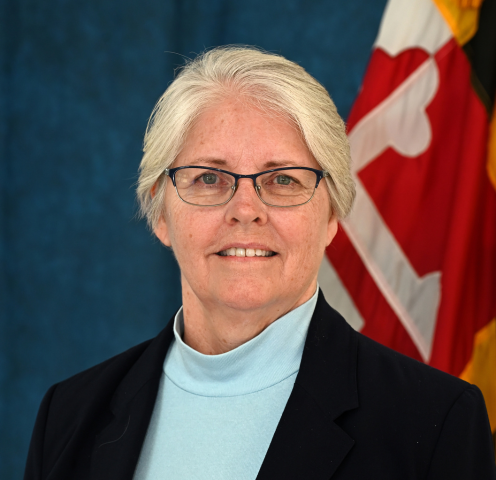
Kristina Donnelly
Secretary, DPSCS Patuxent Institution
kristina.donnelly@maryland.gov
Ms. Donnelly, Secretary of the Maryland Correctional Administrators Association, has decades of with the Department of Public Safety and Correctional Services. She began as an addictions counselor in 1995 and later served as Executive Assistant to the Director at Patuxent Institution. Since 2017, she has been Deputy Director for Field Support Services, overseeing key operations and initiatives. Her extensive experience and leadership have significantly advanced the correctional field in Maryland.

Ryan Ross
Past President, Charles County Detention Center
Ryan Ross is the Director of the Charles County Detention Center, overseeing operations to ensure the safety of inmates and staff. With two decades of experience, he has risen through the ranks, serving as Deputy Director before his current role. In addition to his role as Past President of the Maryland Correctional Administrators Association, he also chairs the Metropolitan Washington Council of Governments Corrections Chiefs Committee. A graduate of the National Jail Leadership Command Academy, he is dedicated to advancing correctional services.
How Officers Are Chosen
MCAA officers are elected every two years through a democratic process. The President appoints a Nominating Committee to gather nominations from members, with additional nominations accepted at the general membership meeting before the election. Voting is conducted privately, and results are verified by the committee. Following tradition, the Vice-President transitions to President after two years, ensuring continuity in leadership.